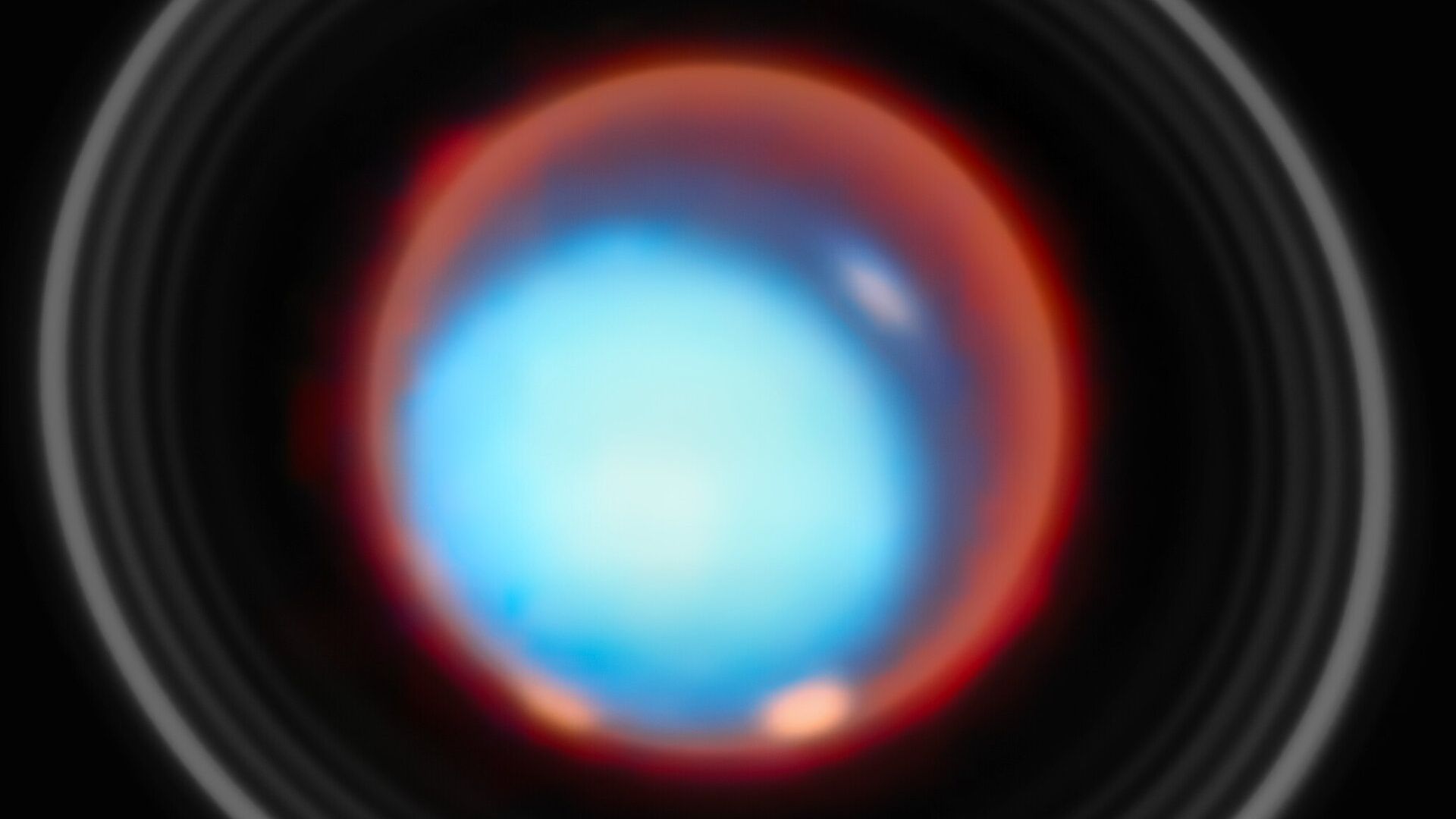
James Webb Space Telescope Unlocks Uranus's Atmospheric & Aurora Secrets with Groundbreaking 3D View
The colossal gas giants of our solar system have long held an air of mystery, their swirling atmospheres concealing untold secrets. Among them, the ice giant Uranus, famously tilted on its side, has presented a particularly enigmatic challenge. Now, thanks to the unparalleled observational capabilities of the James Webb Space Telescope (JWST), scientists have achieved an unprecedented milestone: the first-ever Uranus 3D view of its upper atmosphere. This groundbreaking perspective not only showcases the planet spinning on its axis but also sheds crucial light on its complex atmospheric processes and the mesmerizing mechanics behind its auroras. This revolutionary study, led by Paola Tiranti of Northumbria University in the United Kingdom, marks a significant leap in planetary science. By meticulously mapping the vertical structure of Uranus's upper atmosphere, astronomers have gained insights into how energy travels through this distant world and how its peculiar magnetic field sculpts its atmospheric features. For a deeper dive into these initial findings, you might find our related article, Uranus 3D View: Webb Maps Cooling Atmosphere & Mysterious Magnetic Field, particularly illuminating.Unveiling Uranus's Upper Atmosphere in Three Dimensions
For decades, our understanding of Uranus's upper atmosphere has been limited to two-dimensional projections. The challenge lies in piercing through its thick, hazy layers to discern the subtle variations at extreme altitudes. The JWST, with its superior infrared sensitivity, has finally overcome this hurdle. Researchers utilized Webb to observe Uranus for nearly one full rotation, precisely detecting and mapping the faint glow of molecules high above the planet's cloud tops. "This is the first time we’ve been able to see Uranus’s upper atmosphere in three dimensions," states Paola Tiranti. This Uranus 3D view isn't just a pretty picture; it's a powerful diagnostic tool. Webb's exquisite sensitivity allowed the team to trace the intricate path of energy moving upwards through the planet's atmosphere, revealing how the planet's lopsided magnetic field exerts its influence at these incredible heights. The study specifically focused on mapping the temperature and density of ions – electrically charged particles – within a region known as the ionosphere. This critical layer, extending as high as 5,000 kilometers (3,100 miles) above Uranus's atmosphere, is where the atmosphere becomes ionized and actively interacts with the planet's magnetic field. The data revealed fascinating structural details:- Atmospheric temperatures peak at altitudes between 3,000 and 4,000 kilometers (1,860 and 2,485 miles).
- Ion densities reach their maximum concentration around 1,000 kilometers (620 miles) up.
The Chilling Truth: Uranus's Cooling Atmosphere Confirmed
Beyond the intricate 3D mapping, the JWST observations provided crucial confirmation of a long-standing mystery: Uranus's atmosphere has been steadily cooling down since the 1990s. This phenomenon, initially recorded by ground-based telescopes and earlier spacecraft, had puzzled scientists for years. Webb's precise measurements found an average atmospheric temperature of approximately 150°C (300°F). While still scorching by Earth standards, this temperature is significantly lower than previous recordings, definitively solidifying the trend of atmospheric cooling. The implications of this cooling are still being fully understood, but it suggests complex, long-term energy balance shifts within the ice giant's atmosphere, possibly influenced by seasonal changes, internal heat flow, or even solar activity variations over decades. Understanding such long-term changes is vital for building accurate climate models of distant planets.Decoding Uranus's Mysterious Auroras with Unprecedented Detail
Perhaps one of the most visually stunning revelations from this Uranus 3D view concerns its auroral displays. Just like Earth, Uranus exhibits vibrant auroras near its magnetic poles, but with a unique twist. Webb detected two distinct bands of bright aurora, offering the most detailed look ever into these regions. What makes Uranus's auroras so peculiar is its "strange magnetosphere," as Tiranti describes it. Unlike Earth's relatively aligned magnetic field, Uranus's magnetosphere is dramatically tilted and offset from its rotational axis. This geometric anomaly means that its auroras don't simply stay put; they sweep across the planet's surface in incredibly complex patterns. The Webb data unveiled a fascinating detail: a clear lack of emission and ion density in certain parts of the region between the two aurora bands. This absence is directly linked to the peculiar configuration of Uranus's magnetic field lines, which dictate where charged particles can collide with the atmosphere to create the auroral glow. "Webb has now shown us how deeply those effects reach into the atmosphere," Tiranti explains, highlighting how the telescope's deep atmospheric probing reveals the fundamental connections between the planet's magnetic field and its visible atmospheric phenomena. For an in-depth look at how Webb achieves this, check out First 3D Look: Webb Unveils Uranus's Spinning Atmosphere & Aurora Depths.Beyond Our Solar System: Implications for Exoplanets
The insights gleaned from this detailed Uranus 3D view extend far beyond our immediate cosmic neighborhood. Uranus, as an "ice giant," belongs to a class of planets that are increasingly discovered orbiting other stars – exoplanets. Understanding the energy balance, atmospheric dynamics, and magnetic field interactions of our own solar system's ice giants is a crucial step towards characterizing these distant worlds. The techniques developed to map Uranus's atmosphere in three dimensions and study its cooling trends and auroral activity provide a valuable template for future research into exoplanet atmospheres. By comprehending how energy is transported and dissipated in Uranus's unique environment, scientists can develop more robust models to predict the atmospheric conditions and potential habitability of similar giant planets light-years away. This comparative planetology is a cornerstone of modern astrophysics, offering tantalizing clues about the diversity of planetary systems throughout the galaxy.Key Takeaways from Webb's Uranus 3D View
- First-Ever 3D View: Webb provided the first three-dimensional map of Uranus's upper atmosphere, revealing its vertical structure in unprecedented detail.
- Atmospheric Structure: Scientists mapped ion temperatures and densities up to 5,000 km, showing clear peaks in temperature (3,000-4,000 km) and ion density (1,000 km).
- Magnetic Field Influence: These atmospheric height variations are directly linked to Uranus's uniquely tilted and offset magnetic field.
- Confirmed Cooling: Webb definitively confirmed that Uranus's atmosphere has been cooling since the 1990s, measuring an average temperature of 150°C.
- Aurora Secrets: Two distinct aurora bands were detected, and their patterns were shown to be deeply influenced by the planet's "strange magnetosphere," which causes auroras to sweep across the surface.
- Exoplanet Relevance: Understanding Uranus, an ice giant, provides critical data for characterizing similar giant planets beyond our solar system and assessing their energy balance.
The James Webb Space Telescope's revolutionary Uranus 3D view has fundamentally reshaped our understanding of this distant ice giant. By peering into its atmosphere with unprecedented clarity, scientists have not only mapped its vertical structure and confirmed long-suspected cooling trends but also unlocked the intricate mechanisms behind its enigmatic auroras. This detailed study of Uranus serves as a vital stepping stone, providing invaluable insights that will undoubtedly inform our quest to characterize and comprehend the vast array of giant planets that populate our universe. As Webb continues its mission, we can anticipate even more astonishing revelations about the cosmos, pushing the boundaries of human knowledge ever further.